Calorie Deficit Guide: TDEE, BMR, Macros, and Sustainable Weight Change
Learn how calorie deficit math works, how BMR and TDEE are estimated, why activity level matters, and how to use calorie calculators safely and realistically.
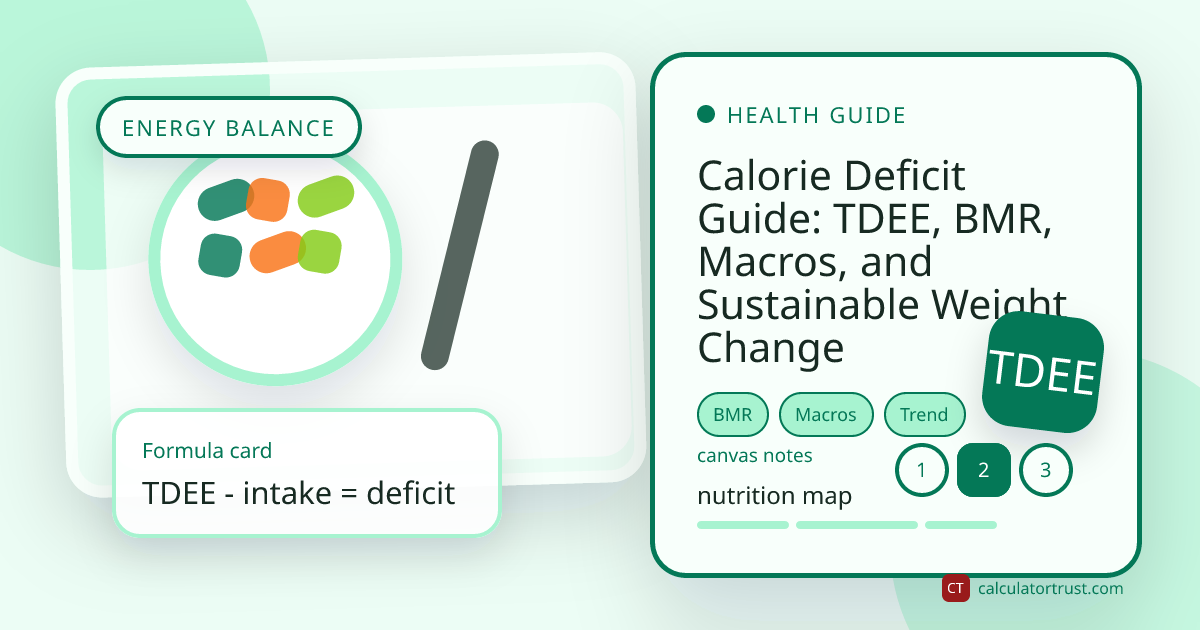
Calorie deficit math is simple in theory and messy in real life. The simple version says weight changes when energy intake is different from energy expenditure. The real-life version includes activity changes, water weight, hunger, sleep, stress, medication, training recovery, and tracking error. A calorie calculator can help, but only if you treat the result as a starting estimate rather than a perfect instruction.
This guide explains BMR, TDEE, activity factors, calorie targets, macros, and the common mistakes that make calorie plans unreliable. Use it with the calorie calculator, BMI calculator, and body fat calculator to understand estimates in context.
What a Calorie Deficit Means
A calorie deficit means average calorie intake is lower than average calorie expenditure. If the gap continues over time, body weight usually trends down. If intake and expenditure are roughly equal, weight tends to maintain. If intake is higher than expenditure, weight tends to rise.
The important word is average. A single day does not decide the trend. A salty meal can increase water weight even during a deficit. A hard workout can cause temporary inflammation and scale weight. A lower-carb day can reduce water weight quickly. The trend matters more than one reading.
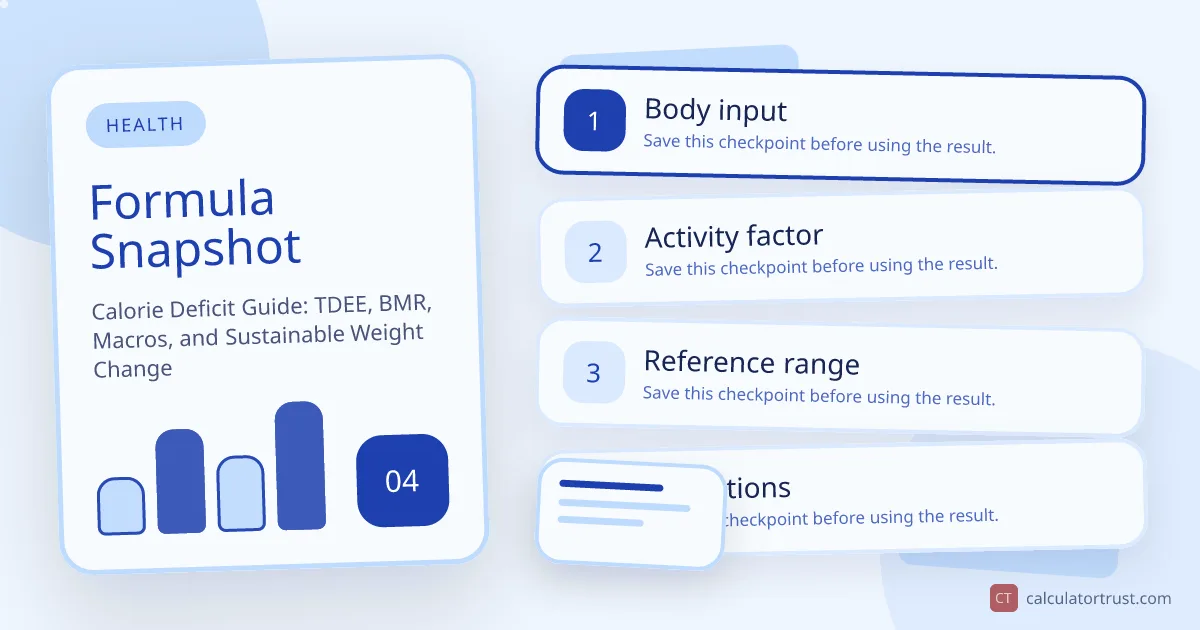
Formula Snapshot
The core equation and the variables that control the answer.
BMR: The Resting Baseline
Basal metabolic rate, or BMR, estimates the energy your body uses at rest for basic functions such as breathing, circulation, temperature regulation, and cellular activity. It is not the same as your daily calorie needs because most people move, digest food, work, train, and perform daily tasks.
A common BMR equation is the Mifflin-St Jeor equation:
- Men: BMR = 10W + 6.25H - 5A + 5
- Women: BMR = 10W + 6.25H - 5A - 161
W is weight in kilograms, H is height in centimeters, and A is age in years. This formula estimates population averages. It does not know your exact body composition, hormones, training history, or medical context.
Input Checklist
The values to collect before trusting the calculation.
TDEE: Total Daily Energy Expenditure
Total daily energy expenditure, or TDEE, estimates how many calories you burn in a full day. It starts with BMR and adds movement, exercise, digestion, and daily activity. Calorie targets usually start from TDEE because TDEE represents maintenance calories.
Activity Factors
Many calculators multiply BMR by an activity factor. Sedentary might be around 1.2, light activity around 1.375, moderate activity around 1.55, very active around 1.725, and extra active higher. These labels are estimates, not exact measurements.
The activity factor is often the weakest input. Two people who both choose "moderate" can have very different step counts, jobs, training intensity, and recovery needs.
Worked Example Flow
A step-by-step flow for checking the math against real numbers.
Worked Example: Building a Calorie Target
Suppose a person has an estimated BMR of 1,650 calories and chooses a moderate activity factor of 1.55. Estimated TDEE is 1,650 x 1.55 = 2,557 calories per day. If the goal is a modest deficit, they might start around 2,100 to 2,250 calories rather than making a severe cut.
After two to four weeks, the trend matters more than the original estimate. If weight is changing faster than intended, the target may be too low. If there is no trend change and tracking is consistent, the target may be too high or activity may be lower than assumed.
Macros: Protein, Carbohydrate, and Fat
Calories determine the energy target, but macros influence hunger, training performance, digestion, and food quality. A useful macro plan usually starts with protein, sets a reasonable fat floor, and fills the remaining calories with carbohydrates and fats based on preference and activity.
Real-World Scenario
How the calculation changes when real-life assumptions are included.
Protein
Protein supports muscle repair and satiety. Active people often plan protein more intentionally during a deficit because lower calories can make it harder to get enough.
Carbohydrates
Carbohydrates support training intensity and are stored with water as glycogen. Changes in carbohydrate intake can move scale weight quickly through water changes, even when fat loss has not changed.
Fat
Dietary fat supports hormones, vitamin absorption, and meal satisfaction. Very low fat plans can be hard to sustain and may not be appropriate for many people.
Comparison Map
A visual way to compare options, ranges, or outcomes.
Why the Scale Moves Unevenly
Weight can fluctuate for reasons that have nothing to do with fat gain or loss. Sodium, carbohydrate intake, soreness, sleep, digestion, alcohol, travel, menstrual cycle, and stress can all change water retention. That is why weekly averages often tell a clearer story than daily scale readings.
A Better Tracking Method
Weigh under similar conditions, such as after waking and using the bathroom. Track the seven-day average. Compare averages across several weeks. Also track waist measurement, training performance, hunger, mood, and energy. A calorie target that damages daily life is not a good target just because the math says it creates a deficit.
Mistake Checklist
Common errors that can make a correct formula produce a misleading result.
How to Adjust After Two to Four Weeks
The first calculator result is only a starting estimate. After two to four weeks of consistent tracking, compare the trend with the goal. If the trend is moving at a reasonable pace and energy is good, there may be no reason to change anything. If the trend is faster than intended, increasing calories slightly may protect training, mood, and adherence. If the trend is not moving and tracking has been consistent, a small adjustment may be useful.
Use Small Adjustments
Large changes make it harder to know what worked. A practical adjustment might be a small calorie change, a step-count change, or a training-volume change. Change one major variable at a time, then observe the next trend window. This turns the calculator into a feedback loop instead of a one-time command.
Do Not Chase Daily Noise
If Monday is up and Tuesday is down, that is normal scale behavior. Adjusting every day can create confusion and stress. Let the average speak before changing the plan.
Quality Check
Simple checks for spotting a result that looks too high, low, or incomplete.
Common Calorie Calculator Mistakes
- Choosing an activity level that describes intent, not reality. Training three times per week does not always offset a low daily step count.
- Ignoring liquid calories and snacks. Oils, drinks, sauces, and bites can change the average.
- Reacting to one weigh-in. Water changes can hide the real trend.
- Cutting too aggressively. Extreme deficits can increase hunger and hurt adherence.
- Treating estimates as medical advice. Health context matters.
Safety and Scope Notes
Calorie calculators are educational estimates. They are not appropriate as the only tool for pregnancy, adolescent growth, eating disorder recovery, medical nutrition therapy, diabetes medication adjustment, kidney disease, competitive weight-class sports, or other higher-risk situations. In those cases, work with a qualified clinician or registered dietitian.
Quick Reference
A compact checklist for using the guide and calculator together.
A sustainable plan should support sleep, training, mood, concentration, and normal daily function. If a target creates dizziness, obsessive tracking, persistent fatigue, or disordered eating thoughts, stop and seek qualified support.
How to Use the Calculator Responsibly
Start with the calorie calculator to estimate maintenance. Choose the most honest activity level you can. Set a moderate target. Track for a few weeks. Adjust based on the trend, not one day. Keep the goal connected to health and function rather than only the scale.
The most useful calorie target is not the lowest number. It is the number you can follow consistently while still living, moving, recovering, and eating enough nutrients.