Ecology Calculator
Energy Cost Calculator
Calculate how much it costs to run an appliance based on wattage, usage hours, and electricity rate.
Enter Values
Calculator loading
The guide, formula, examples, and FAQ are available below.
How to Use This Calculator
Enter Wattage (W)
Type your wattage (w) into the input field. For example: e.g., 100. Minimum value: 0.
Enter Hours Per Day
Type your hours per day into the input field. For example: e.g., 8. Minimum value: 0. Maximum value: 24.
Enter Electricity Rate ($/kWh)
Type your electricity rate ($/kwh) into the input field. For example: e.g., 0.12. Minimum value: 0.
View Your Result
The result appears beside the calculator with the main answer and a detailed calculation breakdown.
Adjust and Explore
Change any input value and calculate again. Use the copy and share controls to save or send your result.
On this page
Formula
Convert wattage to kilowatts by dividing by 1000, multiply by hours of use to get kWh, then multiply by the electricity rate. Scale to monthly or yearly as needed.
Environmental estimate note
Environmental calculators use published average factors and should be treated as estimates.
Actual emissions and energy costs depend on local fuel mix, rates, equipment, and behavior.
Source and review references
Last reviewed by the Calculator Trust Editorial Team. To report an issue, email contact [at] calculatortrust.com.
Common Examples
Understanding the Concept
Every appliance in your home uses electricity, and the costs add up over time. This energy cost calculator helps you determine exactly how much it costs to run any device based on its wattage, how many hours you use it each day, and your local electricity rate. Understanding these costs can help you identify energy-wasting appliances and make smarter choices about your power consumption.
Understanding Watts and Kilowatt-Hours
To understand energy costs, you need to know the difference between watts and kilowatt-hours:
- Watts (W): A measure of power, or how much energy a device uses at any given moment. A 100W light bulb uses 100 watts while it is on.
- Kilowatt-hours (kWh): A measure of energy consumed over time. Running a 1,000W (1 kW) device for one hour uses 1 kWh. This is the unit your electricity bill is based on.
To find the wattage of an appliance, check the label on the device or look it up in the user manual. Common examples: LED bulb (10W), laptop (50W), refrigerator (150W), space heater (1500W), hair dryer (1800W).
Tips to Reduce Energy Costs
Once you know what your appliances cost to run, here are ways to cut your electricity bill:
- Switch to LED lighting: LED bulbs use 75% less energy than incandescent bulbs and last much longer.
- Unplug standby devices: Many electronics draw power even when turned off. Use power strips to easily disconnect multiple devices.
- Use appliances efficiently: Run dishwashers and washing machines with full loads. Air-dry clothes when possible.
- Upgrade old appliances: Modern Energy Star rated appliances can use 10-50% less energy than older models.
The Real Cost of Common Household Appliances
Understanding which appliances consume the most energy helps you prioritize where to cut back. Here is what typical household devices cost to run annually at the U.S. average rate of $0.14 per kWh:
- Central air conditioning (3,500W): Running 8 hours daily during summer months costs roughly $392 per cooling season. This is typically the single largest energy expense in warm climates.
- Electric water heater (4,500W): Operating about 3 hours daily, it costs approximately $690 per year. Switching to a heat pump water heater can cut this by 50-70%.
- Refrigerator (150W, runs ~8 hours/day effectively): About $61 per year. Modern Energy Star models can be as low as $35. Since refrigerators run 24/7 for decades, even small efficiency gains compound into significant savings.
- Gaming PC (300-500W): A serious gaming rig used 4 hours daily costs $61-$102 per year. This does not include the monitor, which adds another $15-$30.
- Electric clothes dryer (5,000W): Running 4 loads per week at about 45 minutes each costs roughly $153 per year. Line-drying even half your loads saves about $75 annually.
Heating and cooling typically account for 40-50% of a household electricity bill. If you are looking for the biggest savings, that is where to start. Appliance-level savings matter most for devices that run many hours per day, like refrigerators, freezers, and entertainment systems in standby mode.
Phantom Power: The Hidden Energy Drain
Phantom power, also called vampire power or standby power, is the electricity consumed by devices that are turned off but still plugged in. That little LED light on your TV, the clock display on your microwave, and the power brick for your laptop charger all draw power around the clock.
The Lawrence Berkeley National Laboratory estimates that phantom loads account for 5-10% of residential electricity use in the United States. For the average household, that translates to $100-$200 per year spent powering devices that are not even being used. A single cable box with DVR can draw 25-40 watts continuously -- that is $31-$49 per year just sitting in standby mode.
The easiest fix is using power strips with switches. Plug your entertainment center, computer setup, or kitchen counter appliances into a strip and flip it off when not in use. Smart power strips take this further by automatically cutting power to peripheral devices when the main device (like your TV or computer) is turned off. A $25 smart power strip can save $50-$100 per year, paying for itself in a few months.
For devices you cannot easily unplug (like the cable box that takes 5 minutes to reboot), check whether your provider offers a low-power standby mode. Many modern devices now include eco-standby options that reduce phantom draw from 30+ watts to under 1 watt.
Electricity Rates: Why Your Bill Varies
Electricity rates in the United States vary enormously by location, provider, and even time of day. Understanding your rate structure is essential for accurate cost calculations:
Geographic variation: Hawaii has the highest average electricity rate at around $0.43 per kWh, while Louisiana averages about $0.10 per kWh. The national average hovers near $0.14-$0.16 per kWh. States with abundant hydroelectric or natural gas resources tend to have lower rates, while island states and those dependent on imported fuel are higher.
Time-of-use pricing: Many utilities now offer time-of-use (TOU) rates where electricity costs more during peak hours (typically 2 PM to 7 PM on weekdays) and less during off-peak hours (nights and weekends). Peak rates can be 2-3 times higher than off-peak rates. If your utility offers TOU pricing, running energy-intensive appliances like dishwashers, dryers, and EV chargers during off-peak hours can cut costs by 20-40%.
Tiered pricing: Some utilities charge a base rate for the first block of energy (say, the first 500 kWh per month) and a higher rate for usage beyond that threshold. Under tiered pricing, every additional kWh costs more, which means high-usage appliances disproportionately affect your bill. Understanding which tier you typically fall into helps you decide whether efficiency upgrades are worth the investment.
Seasonal fluctuations: Rates often increase slightly in summer when demand peaks. Your utility may also add seasonal surcharges or fuel adjustment fees that change the effective per-kWh cost throughout the year.
Solar Panels and Home Energy Economics
If your energy costs are high, solar panels may be worth considering. The economics depend on your electricity rate, sun exposure, roof orientation, and local incentives. In states like California, Arizona, and Texas where both sun exposure and electricity rates are high, residential solar systems often pay for themselves within 6-8 years.
A typical 6 kW residential solar system produces about 7,200-9,000 kWh per year, enough to offset most or all of the average household's 10,500 kWh annual consumption. At $0.14 per kWh, that is $1,008-$1,260 in annual savings. With federal tax credits (currently 30%) and state incentives, the effective cost of installation has dropped below $10,000 in many markets.
Net metering policies, which allow you to sell excess solar power back to the grid at retail rates, dramatically improve the economics. However, not all states offer net metering, and some utilities have implemented less favorable policies in recent years. Check with your local utility before assuming you will receive full credit for excess generation.
Even without solar panels, understanding your per-kWh cost helps you evaluate whether energy-efficient upgrades make financial sense. Replacing a 15-year-old refrigerator with an Energy Star model might save 500 kWh per year. At $0.14/kWh, that is $70 per year -- so a $600 refrigerator pays for itself in energy savings alone within about 8-9 years, not counting the value of improved cooling performance and reliability.
Frequently Asked Questions
How do I find my electricity rate?
How much does it cost to run a space heater?
Do smart plugs help save energy?
How much electricity does a TV use?
What uses the most electricity in a typical home?
Does leaving a phone charger plugged in use electricity?
How much does it cost to charge an electric car?
Is it cheaper to run appliances at night?
How do I calculate the cost if my appliance cycles on and off?
Learn More
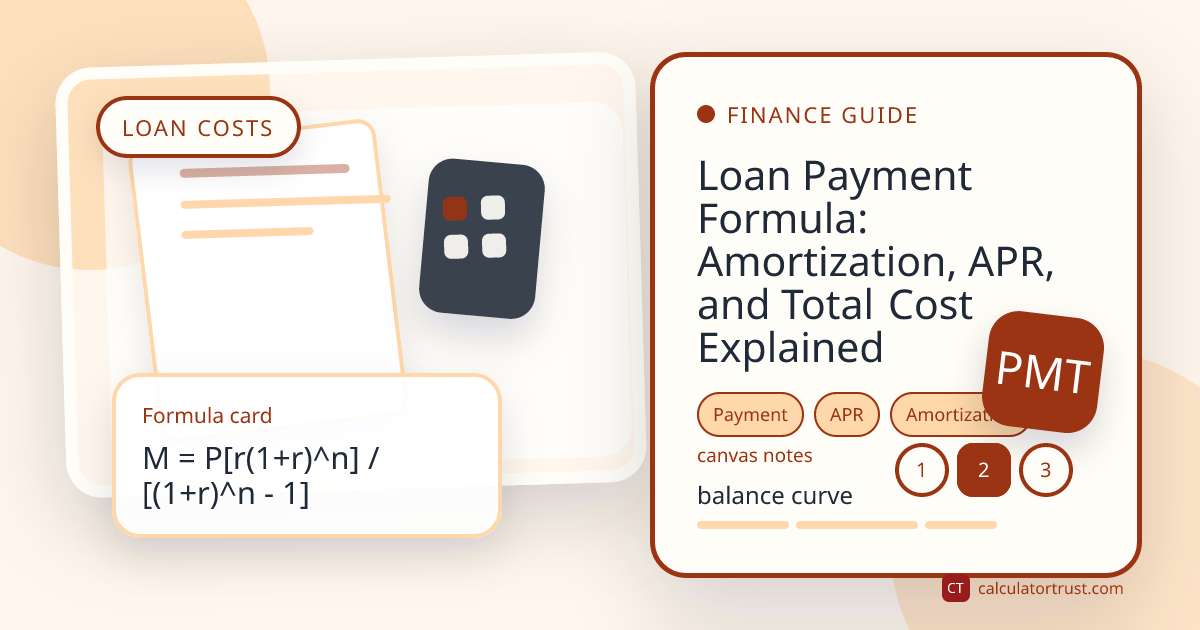
Loan Payment Formula: Amortization, APR, and Total Cost Explained
Learn how loan payments are calculated, how amortization changes principal and interest over time, and how APR, term length, and extra payments affect total cost.
Read Article
Mortgage Affordability Guide: Payment, DTI, Down Payment, and Taxes
A practical guide to estimating mortgage affordability with principal, interest, taxes, insurance, down payment, debt-to-income ratio, and cash reserves.
Read ArticleWritten and reviewed by Calculator Trust Editorial Team
Our calculators are built using verified formulas from academic, government, and scientific sources. Content is fact-checked and reviewed for accuracy.