Food & Nutrition Calculator
Baking Measurement Converter
Convert between cups, tablespoons, teaspoons, milliliters, liters, ounces, and grams for baking.
Enter Values
Calculator loading
The guide, formula, examples, and FAQ are available below.
How to Use This Calculator
Enter Amount
Type your amount into the input field. For example: e.g., 2. Minimum value: 0.
Select From Unit
Choose the appropriate option from the "From Unit" dropdown. Options include: Cups, Tablespoons, Teaspoons, Milliliters (ml), Liters, Fluid Ounces (oz), Grams.
Select To Unit
Choose the appropriate option from the "To Unit" dropdown. Options include: Cups, Tablespoons, Teaspoons, Milliliters (ml), Liters, Fluid Ounces (oz), Grams.
View Your Result
The result appears beside the calculator with the main answer and a detailed calculation breakdown.
Adjust and Explore
Change any input value and calculate again. Use the copy and share controls to save or send your result.
On this page
Formula
Each unit is converted to milliliters as a common base, then converted to the target unit. For grams, a water-equivalent density of 1 g/ml is used.
Calculation methodology
This calculator uses the formula shown on the page and checks common edge cases before returning a result.
Examples and FAQs are included to explain assumptions, limitations, and practical use cases.
Source and review references
Last reviewed by the Calculator Trust Editorial Team. To report an issue, email contact [at] calculatortrust.com.
Common Examples
Understanding the Concept
Baking requires precise measurements, and recipes from different regions often use different units. American recipes typically call for cups and tablespoons, while European recipes use grams and milliliters. This converter helps you translate between common baking measurements so you can follow any recipe with confidence.
Common Baking Conversions
Here are some of the most frequently needed baking conversions to keep in mind:
- 1 cup = 16 tablespoons = 48 teaspoons = ~236.6 ml
- 1 tablespoon = 3 teaspoons = ~14.8 ml
- 1 fluid ounce = 2 tablespoons = ~29.6 ml
- 1 liter = 1000 ml = ~4.23 cups
Keep in mind that these conversions are for volume measurements. When converting to or from grams, the actual weight depends on the density of the ingredient. This calculator uses water-equivalent density (1 g = 1 ml) as a baseline.
Why Accurate Measurement Matters in Baking
Unlike cooking, where you can adjust seasonings to taste, baking is a science that relies on precise ratios. Too much flour can make a cake dense, while too little baking powder means it will not rise properly.
Professional bakers prefer weighing ingredients in grams rather than using volume measurements because weight is more precise and consistent. A cup of flour can vary by 20% or more depending on how it is scooped, but 120 grams of flour is always 120 grams. If accuracy is critical, consider investing in a kitchen scale for the best results.
Common Mistakes When Converting Baking Measurements
Even experienced home bakers make measurement errors that can ruin a recipe. Here are the most common pitfalls and how to avoid them:
- Packing flour into a cup: Scooping a measuring cup directly into a flour bag compacts the flour. A packed cup of all-purpose flour can weigh 160 grams, while a properly spooned-and-leveled cup weighs about 120 grams. That 40-gram difference adds up fast in a recipe calling for 3 cups.
- Confusing fluid ounces with weight ounces: Fluid ounces measure volume, while regular ounces measure weight. Eight fluid ounces of water weighs about 8.3 ounces by weight. For denser ingredients like honey or molasses, the discrepancy grows even larger.
- Using the wrong country's cup size: A US cup is 236.6 ml, but an Australian cup is 250 ml, and a Japanese cup is just 200 ml. If you are following a recipe from another country, check which cup standard the author intended.
- Eyeballing tablespoon and teaspoon amounts: A heaping tablespoon can hold nearly twice as much as a level tablespoon. Always level off your spoon measures with a straight edge for consistent results.
The single best investment for accurate baking is a digital kitchen scale that reads in grams. Scales priced around $10-15 work well for home use, and they eliminate virtually all measurement ambiguity.
A Brief History of Baking Measurements
The cup-and-spoon system that dominates American recipes dates back to 1896, when Fannie Farmer published the Boston Cooking-School Cook Book. Before Farmer, most recipes called for vague quantities like "a walnut-sized lump of butter" or "flour enough to make a stiff dough." Farmer insisted on standardized measuring cups and spoons, and her approach became the American norm within a generation.
Meanwhile, most of Europe adopted the metric system in the 19th and 20th centuries. Professional pastry schools in France, Germany, and Switzerland have always taught weight-based measurement because it eliminates the variability that comes with scooping and leveling. A French patisserie recipe for croissants will specify 500 g of flour, 10 g of salt, and 300 ml of milk with zero ambiguity.
The British system sits somewhere in between. Older UK recipes use Imperial pints (568 ml, larger than the US pint of 473 ml) and Imperial fluid ounces (28.4 ml vs. 29.6 ml in the US). Modern British baking books have largely moved to metric weights, but you will still encounter Imperial measurements in family recipes and vintage cookbooks. When in doubt, check whether a recipe uses US or Imperial units before you start measuring.
Ingredient Density: Why Volume-to-Weight Conversions Vary
This calculator converts between volume units using a 1:1 water-equivalent density, but real baking ingredients have wildly different densities. Understanding these differences is crucial when you need to convert a volume-based recipe to weights or vice versa.
- All-purpose flour: 1 cup weighs approximately 120-130 g, much less than 236 g of water
- Granulated sugar: 1 cup weighs about 200 g
- Brown sugar (packed): 1 cup weighs about 220 g
- Butter: 1 cup weighs about 227 g (conveniently, 2 standard US sticks)
- Honey or maple syrup: 1 cup weighs about 340 g due to higher density
- Cocoa powder: 1 cup weighs only about 85 g because it is so light and airy
For the best accuracy when converting between grams and cups for a specific ingredient, look up the ingredient-specific density rather than relying on the water-equivalent conversion. Many baking websites maintain comprehensive tables of per-ingredient cup-to-gram conversions that account for these density differences.
Tips for Scaling Recipes Up or Down
One of the most practical uses of a baking converter is adjusting recipe quantities. Maybe you want to double a cookie recipe for a bake sale, or halve a cake recipe because you only have a small pan. Scaling is straightforward in theory but has a few practical wrinkles.
When doubling a recipe, multiply every ingredient by two. This works perfectly for most ingredients, but be cautious with leavening agents like baking soda and baking powder. Some bakers recommend using only 1.5 times the leavening when doubling, then adjusting upward if the result is too flat, because excess leavening can cause a metallic taste or make the batter collapse.
Halving recipes presents its own challenge: you sometimes end up with awkward measurements like "1.5 tablespoons" or "half an egg." For half an egg, beat the whole egg and measure out roughly half by volume (about 1.5 tablespoons). For tiny quantities of spices or salt, a pinch is roughly 1/16 of a teaspoon, so keep that approximation in mind.
Baking times change when you scale, too. A doubled cake batter in a larger pan may need 10-15 extra minutes, while a halved batch in a smaller pan may finish 5-10 minutes sooner. Always check for doneness with a toothpick or instant-read thermometer rather than relying solely on the timer.
Frequently Asked Questions
Are grams and milliliters the same?
How many tablespoons are in a cup?
Should I measure flour by weight or volume?
How do I convert a recipe from cups to grams?
Why do US and UK recipes use different cup sizes?
Can I substitute metric measurements in American recipes?
What is the best way to measure sticky ingredients like honey or peanut butter?
Does altitude affect baking measurements?
Learn More
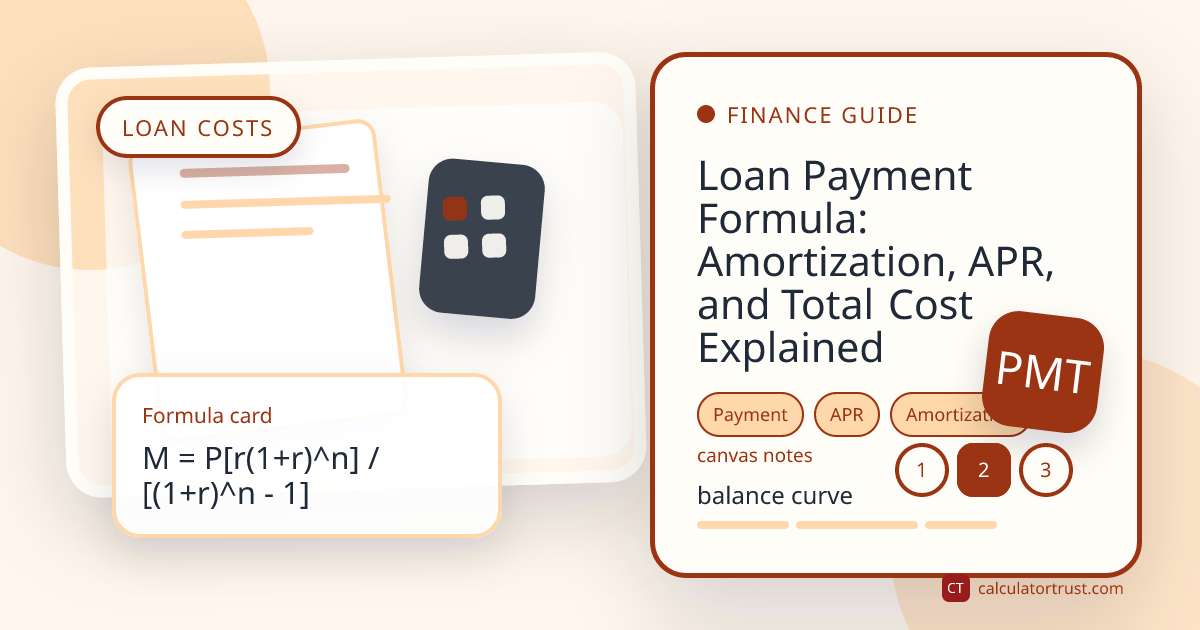
Loan Payment Formula: Amortization, APR, and Total Cost Explained
Learn how loan payments are calculated, how amortization changes principal and interest over time, and how APR, term length, and extra payments affect total cost.
Read Article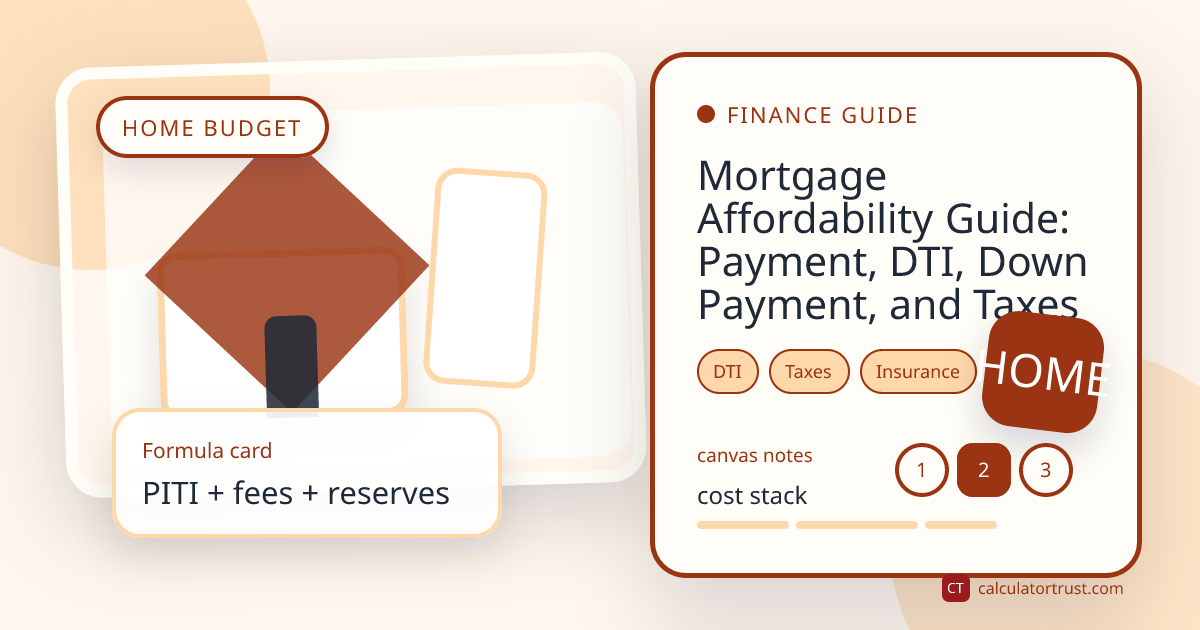
Mortgage Affordability Guide: Payment, DTI, Down Payment, and Taxes
A practical guide to estimating mortgage affordability with principal, interest, taxes, insurance, down payment, debt-to-income ratio, and cash reserves.
Read ArticleWritten and reviewed by Calculator Trust Editorial Team
Our calculators are built using verified formulas from academic, government, and scientific sources. Content is fact-checked and reviewed for accuracy.